

John List: Inspiring Student Curiosity through Real-World Economics
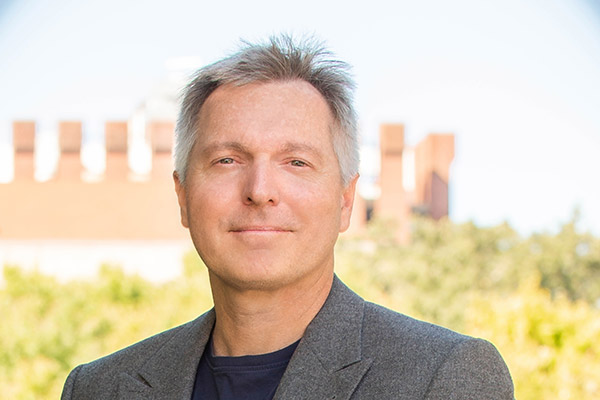
University of Chicago professor John List shares his unique approach to teaching economics.
In this episode, University of Chicago professor John List shares his unique approach to teaching economics. Unlike traditional methods, List begins by exploring real-world questions that intrigue his students, using their interests to frame lessons on economic principles. He talks with St. Louis Fed Economic Education Officer Scott Wolla about how his own curiosity and experiences as a baseball card collector led him to economics. List also explains how he aims to inspire the same curiosity in his students, using field experiments and behavioral economics to help them better understand and apply complex economic concepts in their lives. His innovative teaching methods have made his course a hit at the University of Chicago, demonstrating the power of economic thinking in everyday life.
Scott Wolla: Welcome to Teach Economics at the St. Louis Fed. On this episode, we’re joined by professor John A. List.
Professor List has a long and distinguished career in economics.He received his Ph.D. from the University of Wyoming and is the Kenneth C. Griffin Distinguished Service Professor in Economics at the University of Chicago.
Professor List has also served as senior economist on the White House Council of Economic Advisers; chief economist at Uber, Lyft and Walmart; authored bestselling books; and co-authored a textbook.
We’ll start our conversation with John’s first experience of economics in action.
John List: I think that my economic voyage really started at what is called a baseball card show. So, if you go back to the early ’80s, I was an avid baseball card collector. Some of your listeners might not know what a baseball card is. I want them to think about a picture, kind of a three-by-five picture, of a sports hero—think Michael Jordan or Hank Aaron or Babe Ruth.
Back then, I was raised in a bucolic town called Sun Prairie, Wisconsin. In the winter I would shovel snow, and in the summer I would cut grass, and I would be paid a dollar or two dollars, per effort.I would then go to the local 7-Eleven, and I would buy packs of baseball cards. I built up a massive collection of baseball cards. And then in the mid ’80s, I started going to these shows. And these shows are really spectacles. They’re where people amass in the thousands, and they buy, sell and trade these baseball cards.
So, right before my very eyes, I would see economics in action, and I would buy and sell and trade and try to make my collection stronger. And in the late ’80s, I started to take econ courses at the University of Wisconsin–Stevens Point—that’s where I went to undergrad—and I started to see in the classroom what was happening in those baseball card markets that I had been going to for years.
That really kind of brought everything to life for me.
Wolla: That’s great. In fact, I grew up in a small town in North Dakota as a Minnesota Twins fan, and I think you said, “Brewers,” right?
List: Exactly. I’m a Brewers guy.
Wolla: So, we may have had some of the same cards in our collection.
List: I bet, I bet.
Wolla:Was there a particular economics teacher or professor that really inspired you or helped draw you into the field or mentored you along the way?
List: Yeah, I think for me, that would go back to when I was an undergrad at Stevens Point. There was a professor named Dennis Pellmini. And, when I remember the good old days of Stevens Point, he would always be so passionate about the science, and he would— You know, we took an old class about the great thinkers in economics and the history of economic thought that professorPellminitaught.He taught game theory. He taught some statistics. At a place like Stevens Point, you more or less have to be a jack-of-all-trades and teach everything. So, I took quite a few courses from DennisPellmini,and that was really formative for me.
Wolla: So, combining your love of sports cards and taking those few courses, what were some of the light-bulb moments you had that you drew from that—the baseball card collecting and those trade shows?
List: Yeah, it’s a good question. I was probably the worst student a professor could have, because what I would do is, I would learn something in theory. I would learn in the classroom, and then I would take it, and I would test it in 1987, ’88, ’89, in the baseball card shows.
And of course, the theory gets it wrong most of the time. You know, in general it’s right. The law of demand is true; the law of supply is true. But we would learn about bargaining in Nash bargaining. And then I would take it to the baseball card show, and I would come back, and I would tell the professor, “You know, you’re actually wrong about this. Here’s some data.” It would be really hard for professors, I think, to combat that, because I would have real-life data.
But for me, that was fun because it would really bring out that economics is a science, and we have theory, and we can go out and collect data. We can go to the real world and do a field experiment—which I’m sure we’re going to get to. And you can use that data generation or the field experiment to test the theory directly.
So, it was really an enlightening time for me back then, because at once I was learning about models and about economic predictions, and then I was doing it live. I was doing the science live during the weekend, and then I would bring back those data to the classroom. So, for me, it was quite an inspiring time.
Wolla: So, in some sense, it’s no accident that you found your way into doing field experiments and behavioral economics, from the sound of it. In fact, do you want to talk a little bit about field experiments and, for the audience, explain how field experiments are different than, say, a lab experiment or traditional economic modeling?
List: Sure. That’s a good question. So, I like to think of my field experiments as using the world as my lab, so I can go after questions like: Why do people vote? Or why do inner-city schools fail? Why do people discriminate? These are the types of questions that really drive my research agenda. And to generate data to answer those questions, I go out to the real world, to everyone.
I’m sure all of your listeners have probably been an experimental subject in one of my experiments. In fact, if any of them have taken an Uber or Lyft in the last decade, or they voted in one of the last few presidential elections, for sure they have been a subject in one of my experiments.
Now, the key difference between field experiments and, let’s say, traditional economic modeling is that when I go after a question—such as: Why do people discriminate?—in my field experiment, I can not only measure the level of discrimination, but I can also determine: Why are people discriminating?And that’s the true beauty behind the field experiment.
Traditional economic modeling can also measure the level of discrimination, but it has a really hard time determining the whys behind something. Why do people discriminate? Why is there a gender pay gap? Why do people give to charitable causes? Why do inner-city schools fail? It’s the whys that give us the answers or the solutions behind how we can handle these problems, and that is the true beauty behind the field experimental method; it not only allows you to measure, but it gives you the whys behind something.
Wolla: How do you do that? How do you tease out the why in a field experiment?
List: That’s where the true beauty starts, because I control the treatment assignment. I control which cells, so to speak, which treatment cells people get put in.
Think about a medical trial; that allows you to measure if the drug is working or not. But you need some treatments to determine why the drug is working. In my experiments, I can measure whether discrimination is occurring. And then I have some treatments to determine: What is the impetus for why that discrimination is occurring?
For example, Gary Becker wrote his dissertation in 1957 on a taste for discrimination; that’s a theory for why discrimination might happen. [Arthur] Pigou talked about third-degree price discrimination and said people discriminate to make money. Gary Becker said people discriminate to cater their preferences, to cater their prejudicial preferences. Now, a field experiment allows you to shut down one of those channels and then say, “Does the other channel still lead to discrimination?Okay, if it does, now let’s shut down Becker’s channel, and let’s see if the profit motive still leads to discrimination.”
And that’s the beauty, because you have selective data generation, and you can shut down channels, and then you can see whether the behavior still exists. That really brings out the true value in a field experiment, because, now as a policymaker, if I know it’s a taste for discrimination or a pursuit of profits, I have different tools to combat that type of behavior. So, the true solutions are going to come from these types of questions using a field experiment.
Wolla: That’s really fascinating. And I’m wondering, how does that change the way you teach? Or how can it influence what happens in the classroom when you’re teaching economics?
List: I think in a few ways. First of all, when I teach principles of econ, I show a supply and demand curve. If there’s an astute student in the room, they should ask: “What’s the empirical content behind your prediction of prices and quantity should tend to equilibrium?” Good students say, “Does that really happen?”
A field experiment can show you it does happen. Field experiments also can use students as subjects. So, a lot of times, I talk about the work that I’ve done at Uber [and] Lyft, and students say, “Well, I use Uber and Lyft, and that’s exactly how I behave, too!”
When my team rolled out tipping in the Uber app in 2017, I did a bunch of nationwide tipping experiments, so I can bring those to the classroom, and the students say, “You know what?I do that activity every day.” They’re part of it, and they can feel it.
I think field experiments can also help students to think about being designers. If they were going to test an economic theory, how would they go about designing an experiment? I think that’s an incredible way to learn as well, because you learn about “Here’s the theory; here’s its predictions,” but if I’m put on the spot as a designer, what kind of data do I need to generate to make sure that the theory is correct or to refute the theory? In that way, you’re putting the student in the seat of a subject as a designer, and you’re also giving them empirical content.
I think that’s a trifecta that’s really hard to beat.
Wolla: Yeah. And what a great experience for students as well.
One of the articles I read that you wrote, in preparation for our discussion today, was an article you wrote for The Journal of Economic Education about developing critical thinking. And you talk about fast thinkers and getting them to slow down. Can you talk a little bit about the pedagogy, and what that means for educators?
List: Sure. So, first of all, thanks for reading the paper. When I write papers, typically only two people read them: the editor and one of the three referees. So, when somebody outside of that twosome reads the paper, I really appreciate it. It warms my heart.
Wolla: It was a good one.
List: So, when I think about getting fast thinkers to slow down, I’m really riffing off Danny Kahneman’s system to thinking here. And Danny Kahneman—for all of your listeners—he was a true pioneer in behavioral economics and really helped us understand where models work, when they work and why they fail.
But I was really trying to think about this process [because] I want to improve accuracy in reasoning. I want to overcome cognitive biases. I want to enhance problem solving. In the world today, I want to combat misinformation and disinformation. You know, we have all kinds of misinformation and disinformation thrown at us. And what are the best ways to combat that?
I want to enhance skill development and mastery. I want to really, in the end of the day, create real decision-makers and decision-makers that are making decisions in an optimal sense. And what I realized is, the best we can do for students is teach them how to think, not what to think. To me, in the classroom, it’s really about teaching critical-thinking skills.And that really starts with slowing people’s thinking down, because their first instinct is to use cognitive shortcuts. The first instinct is to take information on in a way that allows them to use heuristics, or, let’s say, cognitive biases are at work here—system to thinking.
I think about slowing the student down in a pedagogical sense by asking them a question.So, for example, you mentioned the textbook that I wrote with Daron Acemoglu and David Laibson. It’s a principles textbook, and we start every chapter off with a question. For example, in chapter 1, it’s: Is Facebook free? And right away being a fast thinker, you say, “Sure it’s free. I don’t pay anything. There’s no subscription fee.” But then we back off and say, “Well, wait, you spend time on Facebook.” And that’s how we introduce opportunity cost. Because a fast thinker neglects their opportunity cost of time.
Most people come into the classroom for the first time, into the economics classroom, and the first thing you have to disabuse them of is, you know, economics isn’t just about inflation and stock market prices—that’s like the first thing you take on. And the second thing you take on is, everyone has these shortcuts. Their shortcut is they ignore opportunity costs. They don’t think on the margin. And I think getting people to slow down and be good critical thinkers, to connect the dots with empiricism and connect the dots with abstract thought—that’s really what that 2021 paper is about. And I think as professors, it’s a real challenge. But there are real opportunities because people come in with flawed reasoning and flawed ways of thinking. And I think we have a real shot to change that in the classroom.
Wolla: Yeah, that’s perfectly stated.
We are going to take a quick break. When we come back, John is going to talk about the Economics for Everyone program, and how he hopes to encourage a broader understanding of the world through economics.
[PROMO]
Andrea Caceres-Santamaria: Hello, everyone! I’m Andrea Caceres-Santamaria, a senior economic education specialist at the St. Louis Fed, and I’ve got some fantastic news to share with you today.
The Federal Reserve has just launched FRE.org, an incredible new website designed specifically for educators like you.
FRE.org is your one-stop-shop for all things economics education. Whether you’re a seasoned veteran in the field or just starting your journey in teaching economics, this website is packed with valuable teaching resources, engaging lesson plans, videos, infographics, and online learning modules that will make learning economics fun and accessible for your students.
FRE.org is also a great place to enhance your teaching skills. You’ll find webinars, workshops, and professional development opportunities that will help you grow as an educator.
Visit FRE.org today and explore all the amazing resources available at your fingertips. While you’re there, sign up for a free account to save your favorite resources.
Happy teaching! Now, back to the show.
[END PROMO]
Wolla: Welcome back. Before the break, John was providing insights on teaching critical thinking, and how it relates to overcoming cognitive biases and enhancing skill development.
We will pick things back up with what inspired John to produce one of the most popular classes at the University of Chicago.
List: Thanks for bringing that up. Let’s start with motivation. It sort of dawned on me [when] I was spending some time in San Francisco—this would have been around 2015—when I first started working with Uber. I ran into one of our University of Chicago alumni named Evan Sharp.
Evan, a very smart guy, a brilliant guy, he was one of the founders of Pinterest. So, Evan was lamenting to me about how when he came to UChicago, he wanted to study economics, and he walked into the classroom as a freshman, and there was a Lagrangian on the board. And he thought, “Wow, what is this?” First of all, he is brilliant. He is a brilliant mathematician, and a brilliant student.But he came to the conclusion that he didn’t want to have to solve Riemann’s hypotheses every morning in our library. He really was disillusioned with economics at that point. And I told him, “Look, I’m chair, and Steve Levitt and I have always talked about taking a step back from our pedagogical approach at the University of Chicago and producing a class that the chemist could take, or the humanist could take, anyone could take. But the idea would be they’re taking this class, and it’s their very first econ class, and they will never take another economics course again.”
That’s not really our principles class, and it’s not really an intermediate class. It was never really a class that we had thought about producing. But I think it turns out to be a very important class. So, Steve and I produced this class, and we taught it for the first time in 2017, and it became the most popular class at the University of Chicago, because it’s a class that’s teaching people how to think like an economist.
So, when you see something in the world, whether it’s, you know: Why do people vote? The standard rational model says you’re not going to be a median— You’re not going to be the median voter. Your vote is not going to matter. But yet people do vote, and it’s trying to use economic thinking to say: Why do people vote?
You can say: Why don’t people pivot as much as they should? What I mean by that is: Why don’t people quit their jobs as much as they should? That’s because people neglect their opportunity cost of time. So, you know: Why do people think in averages in terms of on the margin? In all of these things, the economic way of thinking through problems is just flat-out beautiful.
But the fact that we don’t have classes that teach that—even our principles classes don’t teach that—because, when a student walks in there, we say, “Here’s the scientific method. Here’s a demand and a supply curve.” And we teach them a bunch of economies. We teach them a little math, and we add a bunch of graphing. And it’s really, really hard, because you have all of these things thrown at you at once.
And that’s a really hard way to learn economics. So, we said, “Let’s just step back and take as much of the math and as much of the economies out of the equation as we can, and just teach people how to think like an economist.” And now that’s turned into— You know, we’ve created 44 videos in this series, and those videos are meant for high schoolers and college kids, and we’re trying to go all the way down to toddlers and all the way up to an 85‑, 90-year-old, 95-year-old to teach about the beauty of economic thinking and how people can use economics in their everyday lives.
Wolla: You’re speaking my love language here. So, here at the St.Louis Fed, we start at preschool. We have a preschool curriculum all the way through. We go through the principals level, as far as our treatment. But I’ve also been doing some writing on the literacy-targeted approach to teaching economics, and it sounds very much like what you’re describing.
As you designed your principles course, you talked about a focus on thinking and reasoning. Are there other things that you really had to tackle as you rethought what that principles course looks like?
List: Yeah, I think there is. Because when you go back to first principles, you want to understand what are the biases that people come into the classroom with, and what are the ways of thinking that you believe can help them the most in their course of life?
So, when I started thinking about different companies and organizations I ’ve worked for— As you mentioned, I was a senior economist on the Council of Economic Advisers. I’ve been working for several charitable organizations. I work a lot on: Why do people give to charitable causes? I’ve worked in that area for close to 30 years now, doing field experiments in the economics of charity. I ’ve worked with a lot of different organizations in that realm. I’ve worked with a lot of private companies. Most recently, I ’m the chief economist at Walmart now. I’ve been doing that for about three and a half years.
But one thread that connects all of these organizations that I’ve worked with is that: Simple thinking like an economist in every circle works. Some of the deepest solutions and problems that we’ve solved in all of those settings, they have gone back to first principles. And in thinking about what you could learn very early on, like if I just think like an economist in this setting, and I have good critical thinking skills, that gets me to some first door to solutions.
Now about tariffs. I’ve been working a lot on tariffs at Walmart. If I think about a lot of the issues that I worked on in the Council of Economic Advisers around global warming and climate change; if I think a lot about working with the Sierra Club or various organizations and how to think about presenting the facts around why they need more resources—it’s a lot of basic economics.
So, the thread from the classroom to the boardroom to the living room is: Standard, basic economic thinking can get you a long way to good solutions. And that’s what really drives my pedagogical approach, because once we have that initial intuition and we’re along that process, that really opens up a lot of doors and a lot of solutions for us.
Wolla: That is super. In fact, one of the other areas that I know you’ve written a lot about and think a lot about is behavioral economics. So, how should the way that we as economists and economic educators think about incentives and rationality and preferences? How should behavioral economics play into the way we talk about and teach economics?
List: That ’s a great question. Where I am right now is— First of all, I always begin with preferences, beliefs and constraints. These are the building blocks of how we make predictions, how we understand what people will do, how we understand mechanisms, how we understand institutions and policies.
Behavioral economics has been an important innovation in the past several years and in the past several decades. I like to think about teaching and using behavioral economics through an analogy: You know, you’re wearing a St. Louis Cardinals baseball outfit. And I’m a Brewer—Milwaukee Brewer, of course, not a beer brewer—but, let’s talk about a story. If I wanted to fly from Chicago, and I wanted to go to a Boston Red Sox game, of course I need to drive from my house here in Chicago, and I need to go up to O’Hare Airport, and I need to fly to Logan Airport, which is in Boston. And then I need to drive from Boston to Fenway Park. Neoclassical theory will get me from my house to Fenway Park. Behavioral economics will get me into my seat.
These are complements, not substitutes. And when used in that way, the big, bolder things—law of demand, law of supply, general principles about labor supply elasticities and inflation—neoclassical theory is going to get us in the ballpark, but behavioral economics are the refinements and the tools to really help us get to our seat, where we eventually want to be in the end—we have to get to our seat.
So pedagogically, I think about teaching the principles, as we have for many years. But then I like to augment it with tweaks and with insights from behavioral economics. You know, sometimes behavioral economics can be potentially revolutionary, like with loss aversion. People might view their choices as deviations from a reference point.
But I like to put that kind of thinking within a neoclassical model, within a model where you have objectives and you have people trying to achieve. Sure, people make mistakes, and when they systematically make a mistake, we can label it something and call it behavioral economics—sometimes people go to the wrong seat once they get to Fenway—but these are really complements in the way we teach, in the way we learn about the world, rather than substitutes.
Wolla: Yeah. I think that’s a great way for thinking about how those two pieces fit together. Too often, we might think of them as substitutes or as two different things. I like the way you put them together.
As an educator, what experiences have been the most rewarding for you?
List: I think that it’s when you’re standing in front of a classroom, and you’re explaining a difficult concept—and we have lots of difficult concepts in economics—but it’s really when the light bulb goes off and you see a student and you can see it in their face, and you can see it in their eyes, that they finally get it.
To me, that’s probably the most rewarding thing. Whether you talk about publishing and changing the world, the most immediate reward of seeing somebody getting it, and then you can see the wheels going about how they’re going to apply it in their lives, and how they’re going to apply it to understand the world, and how they’re going to change the world with economics—that light bulb going off, and then it triggers a sequence of events. That’s by far the most rewarding experience.
Wolla: Do you have any final thoughts or advice for fellow economic educators?
List: Yeah, I would say one simple piece of advice: Your job is much, much more important than you actually realize. What you’re doing is you are setting the course for young, brilliant people to think about the world in a different way.
You know, as economists, we think about the world atypically or— To us, it’s obvious. But to many, many people outside, it’s very counterintuitive. And I think, to all the educators out there— First of all, thank you very much. But never underestimate the value of what you’re doing, not only for your students, but also for society at large.
Wolla: John, thank you so much for spending time with me today. It’s really an honor to have you on the show. And, thank you for your contributions to economic education.
List: I want to thank you so much for having me, Scott, and keep changing the world. I’m proud of you.
Wolla: Thank you. That means a lot coming from you.
Wolla: Thank you for listening to my conversation with professor John A. List.
If you like this show, please subscribe anywhere you get podcasts. And be sure to leave us a review; each one really helps.
I’m Scott Wolla, and from the St.Louis Fed, you’ve been listening to Teach Economics.
---
If you have difficulty accessing this content due to a disability, please contact us at education@fre.org or call the St. Louis Fed at 314-444-8444 and ask for Economic Education.